

Shoreline Vegetation and Permitting
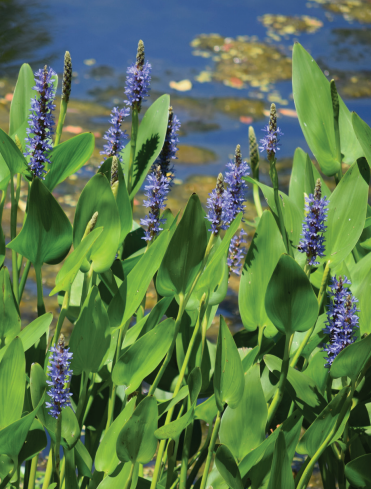
Planting vegetation along your shoreline is great for slowing runoff, catching sediment, capturing excess nutrients and stabilizing the soil. Plants along the water’s edge also provide valuable habitat for fish and wildlife. As an extension of your backyard, your shoreline serves as a last line of defense against introducing excess nutrients such as nitrogen and phosphorus, and other harmful pollutants to your lake.
Here are some things to consider:
• Plants can slow water flow, catch runoff, and uptake excess nutrients. As they absorb nutrients, they slow the growth of algae and unwanted exotic plant species.
• Planting native vegetation helps reduce exotic and invasive plant growth. This is better for the lake and reduces your landscape management costs. Increasing biodiversity and saving you money by reducing management costs. • Native vegetation near the shoreline stabilizes sediment which results in clearer water. Plants also minimize wave action, keeping your property from eroding into the lake.
• Native emergent plants provide nurseries for fish and invertebrate species. Your shoreline can provide hiding spots to help young lake dwellers from becoming a bird’s breakfast!
In Orange County, a lakeshore homeowner is entitled to a vegetation-free access corridor of 20% or 30 feet of total linear shoreline, whichever is greater, without a permit. Boat docks are to be placed in the access corridor. If you want to remove vegetation outside of this area, a Lakeshore Protection (LSP) permit is required. This permit will allow you to remove nuisance and exotic vegetation; however, replanting of beneficial native species may be required to meet 80% coverage of native vegetation. The LSP permit will allow you to maintain the shoreline clear of nuisance and exotic vegetation as long as you sustain 80% native plant coverage.
Contact EPD at 407-836-1402 or WetlandPermitting@ocfl.net for specific permitting requirements.
For More Information, see below:
Stewardship Guide for Lakefront Homeowners:
Living Lakeshores:
https://www.ocfl.net/Environment/HealthyLakesNeedLivingLakeshores.aspx
